An Active Arrival

So. We made it! Our journey to Vancouver went smooth as silk and we entered the country of brownbears without any hazzard. We are now proud owners of a beautifully crafted, printed 1year Visa which I am already afraid to lose somewhere on the road…

Vancouver greeted us with an icy drizzle but coming from Berlin, we didn’t even notice. What we immediately realized, however, was the extreme politeness of the Canadians. This loveable stereotype seems to be true! “Excuse me, Sir” here, “Sorry for the inconvenience” there and cheerful “Hi there – Bye Now“s everywhere! And we’re not making it up when we’re telling you that we already scored two free busrides! Jeez, Canada, we’re already in love with you. That first night, the jetlag hit us hard and we went to bed pretty much straight after we had checked into our AirBnB.

scyline vancity


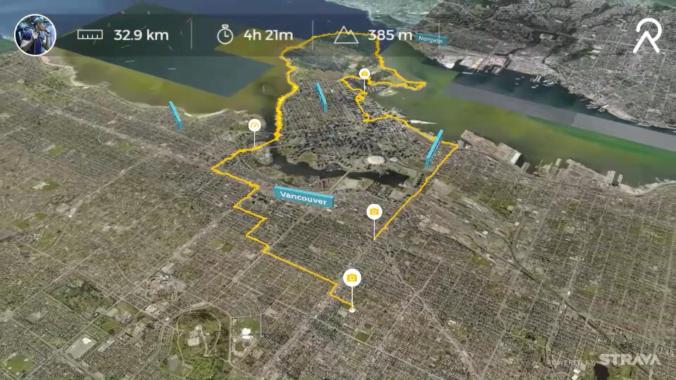
Naturally, our time in Vancouver didn’t stay as sleepy. Yes, our jetlag drove us to bed early every night but we did walk around all day. In fact, we did a 33km sightseeing-run just yesterday because I guess that’s what happens when we feel like it’s been too long since a decent workout Click on the picture below to see how we animated our route with Strava & relive (two very recommendable apps).


Route Screenshot 01


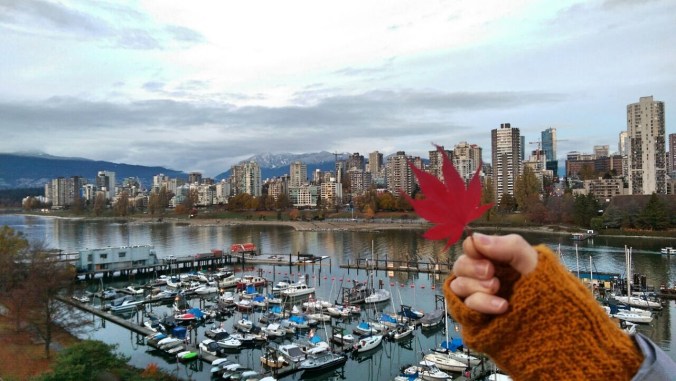
“Vancity” itself is pretty cool: There are looooads of great coffee shops around and we also loved that it’s a perfect city for biking and walking (nice parks and broad bike paths which are separated from pedestrians as well as cars – Berlin, pleeaaase take a leaf out of that book! Please!). We especially loved the vast Stanley’s Park, the markets on Granville Island and the fact that you can see snowy mountains looming behind the scyline. Yet, we also noticed a great number of homeless people but can’t really say more about this issue without having done any further research…


Today, we’ll jump on a Greyhound bus straight to Whistler Village. Whistler-Blackcomb is THE biggest ski resort in Canada and internationally famous amongst snowlovers so we’re hoping to find a job there. The prospect of spending the winter skiiing/snowboarding is just too tempting and all staff members get a free season pass as well as discounts on gear rentals and accommodation. Wish us luck! And now lean back and enjoy the first result of the – also very recommendable – 1secondeveryday app. The short clip shows us travelling to Canada and running about Vancouver.


Theo, the Mountain Geezer

theo small

Theo in his favorite chair.

Let us tell you a story about a man. A man who’s 64 years old but can still stem more weight than most young men in their bloom. A man who grew up as the son of a wealthy Belgium entrepreneur who taught him how to work with any material you can think of: wood, stone, leather, … A man who grew up as the son of a nature-loving mother who owned a farm in the South of Spain and taught him the language of dogs and horses and the secret whispers of plants.

His name is Theo.

Theo deeply impressed us and made our stay on his farm in Andalusia as memorable as it was. Let’s say he truly was that extra pinch of cinnamon in our morning porridge. That extra dab of cream on top of a warm apple crumble. That extra … ah never mind, I guess you know where I’m going with this. Keep reading to learn more about our stay with him and be fascinated…

The Man

Theo was born in Belgium but has been living in the South of Spain for more than 40 years by now. His life story contains a trillion of bends, peaks and dips which we won’t mention in detail. But as always, his childhood laid the foundations for his eventful biography: He inherited priceless skills from his parents. His father owned a successful, internationally operating picture frame factory and little Theo had been playing between the machines since he could walk. Later, he led the company himself and had by then perfectionated many working skills. All the buildings you see on the pictures – he built himself.  All the plants you walk past in his huge gardens – he planted himself. And that’s due to the fact that his mother led a very different lifestyle than his father: After their divorce, she bought land in Spain and taught her son how to plough, plant, harvest as well as how to work with animals such a donkeys, horses and dogs.

We spend almost every evening with Theo and couldn’t get enough of his anecdotes. He is as cheeky as he is smart. As quick-tempered as he is gentle. As stubborn as he is generous. A true character.

The Farm

Theo owns a whole mountain. Not kidding. His property is located close to the village “Cortes de la Frontera” and encompasses about 450hectars. Even after 10 days there, we did not see all corners of this vast area. There are about 5 uninhabited houses which are mainly used for storage. Theo himself lives in a construction site. Although his gorgeous pool and the ground floor are ready, the second floor and the upper tower (yes, a tower) remain unfinished. It was a true adventure in itself to climb up those steps!


The Gardens

Then, there are two huge gardens out of which he only tends one at the moment. There, he grows so many fruits and vegetables that you can’t help but think of Eden: Apples, pears, peaches, pomegranates, figs, grapes! Cauliflowers, broccoli, carrots, cabbage, corn, potatoes, pumpkins, tomatoes, courgettes! Plus, many flowers, herbs and medical plants. He cultivates them all in permaculture and only uses his self-made hummus as fertilizer. Only seldom, he sells some boxes of his harvest for cheap or gives them away to neighbours. The rest, he eats himself or feeds to his animals. According to his own opinion, the gardens give him a hell lot of work but even more pleasure. And we felt the same: More than once, we (voluntarily) helped him to water, plant and plough and shed more than a few litres of sweat in the process. But it is satisfying work and just as I have loved the months of farm work back in Australia, I’ve loved it in Andalusia.


The Animals:

At the moment, he shares the huge area with 16 horses, 8 cats, 5 dogs, 4 pigs, 1 mule and 1 donkey. Then, there are some scorpions, snakes, spiders and a variety of bugs. Most of the animals roam freely through the land, only the gardens and the outer borders are fenced. And that’s just a momentary count, the number has variated greatly over the years…. Personally, we want to put the focus on the horses because we ended up taking care of them and even mounting these beauties without saddles – true Western style. But before we could ride for the first time, we first had to catch them.

“Say what? Didn’t you just write that they live on the farm?”

Um, technically, yes. But they are too much work for Theo at the moment which is why he prefers to let them roam freely through the surrounding lands. The majority of the neighbours is fine with it, the state does not care at all and the area is so remote that the chance of them striding over a highway is like 0%. So, we had to get them back onto the farm first. To make a long story short: Theo caught the leading mare of a group of six horses, put the string in my hands and waved goodbye. We then led the herd a few kilometers back to the farm and spend the next few days cleaning saddles and bridles and finally riding them. Theo barely supervised us and fully trusted my knowledge – something that would NEVER happen to you in Germany. Already on our second ride, we went without saddles (brave Sebastian!). It was an amazing experience and I can’t wait to come back and work more with these beauties.


Intrigued?

We are happy to provide Theo’s contact details if you are interested to get in touch with him. Be prepared to work hard and sweat harder (in return for food and accommodation). It’ll be worth it though: Priceless scenery, soul-satisfying work with animals and plants, endless life lessons and the chance to meet one of the most fascinating characters we ever crossed paths with. As for ourselves: We already pinkie-promised to come back with more time on our hands… Fare well, Theo!

 

IMG_8187-2-2

Sneak-Peek of Val Grande’s Snappy Peaks

We’re back! After 8days in the Italian National Park Val Grande (and two more days at Lago di Mergozzo to soak our wretched feet and sore muscles), we’re back in Berlin. The crowded subways and busy masses were a big, smacking slap in our sun- and windburned faces, but we are used to that from other returns. Which is why today, I preferred to hide away in my flat on a Friday night, providing you with a first sneak-peek of our adventure. We’ll probably need a couple of weeks to sort out all our footage, but I promise there will be more visual input soon. So, here are our first flashbacks of this wild “big valley”:

The bloodstained history

Interesting! As a matter of fact, Val Grande was not always as remote as it is today: There used to be many alps and logging was also popular for some time. However, most workers would prefer to overwinter down in the valleys. So even back then, large parts of Val Grande were uninhabited for whole months at a time. During World War 2, the area became a bloody crime scene: In 1944,  German SS-units and fascist Italian troops scoured the whole area, searching for members of the Italian Resistenza (an anti-fascist movement), who were hiding in the mountains. During that mission, more than 500 people got murdered – not a few of them belonging to the local farmers who were accused of hiding the partisans. This cruel event contributed even more to the retreat of people out of Val Grande and left many villages in ruins. In 1992, the area was declared as a National Park (the name deriving from the remotest of the valleys). But even decades later, you come across many old stone huts – most of them in ruins. Especially Sebastian loved exploring them while I was often just as spooked as I was fascinated.


IMG_2456

A village in ruins….


The park management restored some of those huts and created quite comfortable bivouacs. They are very basic but open to anyone and free of charge. And trust me, they will make you feel like a king*queen in his*her castle after a rough day’s hike! Some shelters even have solar panels but don’t expect a shower or feather beds there 😉 We slept in those Bivacchios whenever we could – sometimes sharing them with other hikers, sometimes having a hut all to ourselves. Only once, we needed our tent. But more on that later.


The wilderness ranking

A 9 out of 10 considering the fact that it’s in the middle of Europe and so close to other touristic hotspots such as the Lago Maggiore. Big! Wild! Rough! We would have never expected that it is even possible in the Alps to hike for a few days without meeting ANYONE! It is possible in Val Grande though, especially if you stick to the little paths. There are only a few tracks which are properly marked and maintained by the park management (and even those are only footpaths too narrow for two people walking next to each other) and once you leave them, you can be pretty much sure to be all by yourself. Skinny-dipping ahoi!

IMG_2552

Not an unsual sight: A more than brittle bridge over a gorge. We took a different way around it…

And even if you stay on those marked tracks, you will probably encounter only 1-4 other hikers per day (of course, that can be different at other times of the year. There are only two small villages (Colorro and Cicogna) close to the park’s borders where people live all year around and which you can reach by car. Very few other huts inside the park were actually occupied or looked like someone would slowly rebuilt them. So from those two villages onwards, you have to walk. Walking off-track, however, is often impossible due to the thick vegetation or insurmountable cliffs. Some paths seem to be long forgotten goat tracks which can’t be found on any map and suddenly end in the middle of no-where. On two days, we could only proceed with the help of chains and ropes, so you need to be sure-footed and an experienced hiker to conquer those challenges (climbing experience also helps). Personally, we navigated with map, compass and GPS and found the combination of all three very helpful.


IMG_2735


Nonetheless, we would say that the National Park offers paths of many difficulty levels and we met a fair number of people who seemed less fit than us and still enjoyed their hikes. If needed, you are able to reach civilization in 2-3 days. Just make sure to inform yourself properly and be aware of the possible dangers. Val Grande has already claimed lives.


The animalistic companions

Thick bushes always mean that you will have neighbours and lurkers in the shadows. In fact, we met wild animals every day… But don’t worry, except for some vipers none of them are truly dangerous. And although some people even call the park “the valley of snakes”, we only saw a tiny (dead) one on a street. Just make sure to lumber through the wild like an overweight elephant (stomp-stomp-stomp) and you probably won’t come across any of those shy reptiles. Who we encountered regularly, were lots of birds and spiders, even more lizards and mice, a couple of fireflies, ticks and slugs, swarms of mozzies, a few chamoises and one dormouse. So not too wild. Are you terrified of wolves and bears? Good news then: You won’t meet any in Val Grande. Only the mice are a real pain in the a%# since they eat everything you haven’t secured properly over night (put all your food and garbage in closed bags and hang them up where they can’t be reached by hungry animals).

And last but not least: The social factor

Val Grande is remote and lonely, so make sure to take a good travel buddy with you – not only for safety reasons. Right at the beginning of our trip, we were all by ourselves for three long days and nights in a row. So, if you are more the companionable-scouts-kind-of-type and dislike silence, bring some jolly fellows with you. Because here is a list of the great entertainments of trekking-life: You can play carts, try to see your future in the flames of a bonfire or determinately belabour your walking stick with a knife until it has become a fine piece of art. Oh, and I guess there are a trillion good spots for playing hide-and-seek… But that’s it. Oddly enough, we NEVER got bored. Walking, preparing food, collecting firewood and edible plants, eating, sleeping, packing, unpacking and repacking, walking again, … – our lives consisted of very basic duties and we loved it.

Read the full stories here:

Part 1     Part 2     Part 3     Part 4    V-Log

IMG_2252

“It is only in adventure that some people succeed in knowing themselves – in finding themselves.” Andre Gide